The Night a Dealer Ran Out of Room
In the autumn of 2008, the trading desks of major Wall Street broker-dealers faced a problem that standard finance textbooks had not prepared anyone to explain. Across every asset class — investment-grade bonds, foreign exchange, commodities, even equity index options — risk premia had exploded simultaneously. An investor buying credit protection in the CDS market, another taking on currency carry exposure, a third selling volatility in the options pit: all were being offered returns that seemed, by any historical standard, remarkable. Yet the institutions best positioned to absorb these opportunities were retreating rather than advancing.
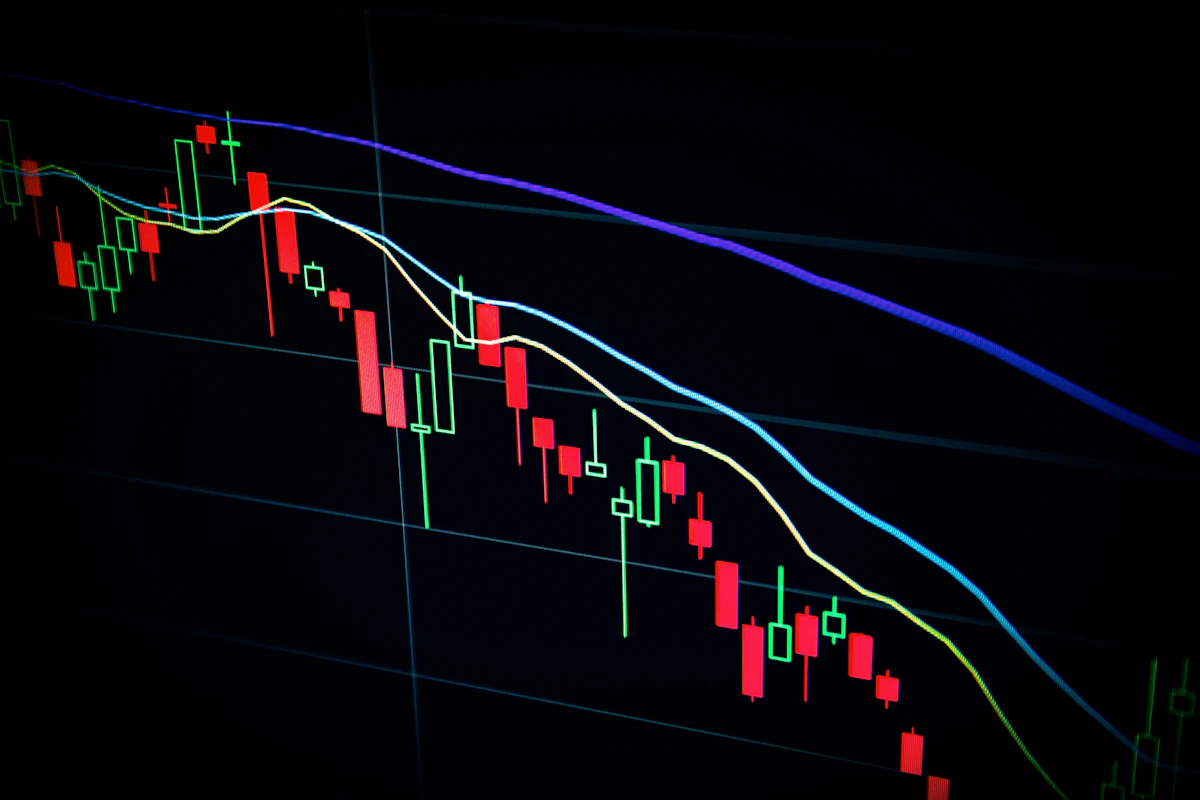
The puzzle was not merely that markets had fallen. Markets fall. The puzzle was the cross-asset synchrony of the risk premium expansion, and the withdrawal of the very entities — primary dealers, broker-dealers, major banks — whose purpose is to intermediate risk. Something was constraining them at precisely the moment when the returns to risk-bearing were highest.
Zhiguo He, Bryan Kelly, and Asaf Manela published their answer in a 2017 paper in the Journal of Financial Economics. Titled "Intermediary Asset Pricing: New Evidence from Many Asset Classes", it provided what may be the most comprehensive cross-asset test of a simple but powerful claim: the marginal investor in financial markets is not the representative household of standard theory, but the financial intermediary. And when intermediaries run low on capital, the price of risk rises everywhere.
Why Traditional Models Struggle
The canonical asset pricing model — the Capital Asset Pricing Model and its descendants — posits a representative investor who holds the market portfolio and evaluates assets based on their covariance with aggregate consumption or wealth. In this world, expected returns depend on a single, economy-wide stochastic discount factor (SDF) tied to household consumption growth.
This framework has explanatory power for broad equity premia over long horizons. But it fails conspicuously at explaining why risk premia across different asset classes move together in crises, and why those co-movements coincide with stress in specific institutions rather than broad deterioration in household income. Household consumption data does not spike when a primary dealer suffers losses on its repo book.
The intermediary asset pricing literature, pioneered theoretically by He and Krishnamurthy (2013), proposed a different architecture. In their model, the representative household is replaced by a two-tier structure: households invest through financial intermediaries, and intermediaries are the entities that actually hold risky assets. The SDF that prices assets is therefore the intermediary's marginal utility, not the household's.
This distinction matters because intermediaries face constraints that households do not. They operate under leverage limits, regulatory capital requirements, and funding structures — typically short-term debt — that create fragility. When intermediary capital erodes, the cost of bearing additional risk rises for them, which is equivalent to saying that the price they require to absorb risky assets increases. Risk premia expand not because households have become more risk-averse, but because the specialized firms that intermediate risk have run out of balance sheet capacity.
The HKM Framework
He, Kelly, and Manela take this theoretical insight and subject it to rigorous empirical scrutiny across an unusually broad cross-section of asset classes. Their sample runs from 1970 to 2012 and spans:
- US equities (size and book-to-market portfolios)
- US Treasury bonds (across maturities)
- Corporate bonds (investment grade and high yield)
- Sovereign bonds (developed and emerging markets)
- Currency carry portfolios
- Commodity futures
- Equity index options (variance risk premium)
The unifying variable is what they call the intermediary capital ratio: equity capital of primary dealers divided by their total assets (equity plus debt). This ratio measures how much of their own capital dealers have at stake — a high ratio means dealers are well-capitalized and have room to absorb more risk; a low ratio means their balance sheets are stressed and their ability to intermediate is constrained.
The central prediction of their model is that the innovation in the capital ratio — the unexpected change in dealer health — should be negatively priced across assets. Assets that covary negatively with dealer capital (that lose value when dealers are stressed) should carry higher average returns as compensation.
The Intermediary Capital Ratio in Practice
Constructing the capital ratio requires balance sheet data on primary dealers, specifically the institutions with formal trading relationships with the Federal Reserve. He, Kelly, and Manela use data from the Federal Reserve's Flow of Funds accounts, which report assets and liabilities of broker-dealers at a quarterly frequency.
The ratio behaves exactly as the crisis narrative suggests. It stood at comfortable levels through most of the 1990s. It began declining as leverage expanded during the mid-2000s credit boom. It collapsed during the 2008 financial crisis as dealer equity was wiped out and total assets remained elevated, or as balance sheet contraction lagged behind equity destruction.
The Brunnermeier-Pedersen framework on margin spirals captures part of this dynamic, but HKM take the empirical program further by measuring how changes in dealer capital directly translate into changes in equilibrium risk premia across asset classes.
A crucial feature of the capital ratio measure is its forward-looking content. Regression tests show that a one-standard-deviation decline in the innovation to the capital ratio is associated with higher future returns across essentially all asset classes in the sample. The effect is statistically significant in most categories and economically meaningful in all of them.
| Asset Class | Cross-Sectional R² | Intermediary SDF Works? |
|---|---|---|
| US Equities (25 FF portfolios) | ~55% | Yes |
| US Treasuries | ~48% | Yes |
| Corporate Bonds | ~61% | Yes |
| Sovereign Bonds | ~44% | Yes |
| Currency Carry | ~38% | Yes |
| Commodity Futures | ~42% | Yes |
| Equity Options | ~52% | Yes |
The numbers in this table are approximate and drawn from the authors' reported pricing tests. The pattern, however, is robust: a single intermediary-based SDF prices assets across all these categories better than a standard consumption-based model or a simple market factor.
The Leverage Cycle and Cross-Asset Contagion
A key implication of the HKM framework concerns what happens when dealers deleverage. When a negative shock hits dealer equity — loan losses, mark-to-market declines, counterparty failures — dealers face a choice between issuing new equity (expensive and slow) or reducing assets (fast but disruptive). Most choose the latter. Asset sales across multiple categories simultaneously lower prices across all classes the dealer holds, while simultaneously raising required returns.
This mechanism explains why liquidity crises propagate across asset classes that appear fundamentally unrelated. A dealer who has suffered losses in the mortgage market and must reduce balance sheet exposure will sell what it can: Treasuries for the bid-ask spreads, currency positions for the ease of unwinding, commodity futures for the liquidity. The result is correlated drawdowns across structurally unrelated assets, driven not by common fundamentals but by common intermediary distress.
Correlation breakdown during crises is therefore not primarily a statistical phenomenon — it is a structural one, emanating from the common factor of intermediary capital constraints.
Adrian and Shin (2014) provided the complementary supply-side view: broker-dealer leverage is procyclical. Dealers actively manage their leverage ratio, expanding balance sheets when asset values rise (as rising equity loosens capital constraints) and contracting them when values fall. This procyclicality converts small fundamental shocks into large asset price swings, amplifying both booms and crises.
Cross-Asset Pricing Tests
The empirical architecture of HKM is a cross-sectional pricing exercise. For each asset class, they compute the loading of each portfolio's returns on the intermediary capital ratio innovation. They then test whether higher loadings are associated with higher average returns — the fundamental prediction of any risk-based asset pricing model.
The answer is yes, consistently. Assets that lose more value when dealer capital deteriorates (negative loadings on the capital ratio innovation) earn higher average returns. The relationship holds within asset classes (riskier corporate bonds load more negatively and earn more) and across them (commodities and credit, which are both heavily intermediated, respond more strongly to dealer capital than on-the-run Treasuries, which are more directly supported by the Fed).
The HKM model also outperforms competing explanations. Against a consumption-based SDF, the intermediary capital model wins in most asset classes. Against the Fama-French factors for equities, the intermediary model explains roughly comparable variance in average returns. The novelty is that a single, institution-based variable prices assets across the entire cross-section of financial markets simultaneously.
A separate but related body of evidence concerns the margin constraints that intermediaries face during stress. Periods when the VIX spikes and repo markets freeze up coincide precisely with capital ratio compression, as dealers' collateral is marked down and their funding costs rise. The capital ratio, it turns out, is a composite measure of multiple constraint channels — regulatory capital, margin requirements, and funding liquidity — all of which tighten simultaneously in a crisis.
Evidence Beyond the 2008 Crisis
One potential criticism of intermediary asset pricing is that its empirical support derives disproportionately from the 2008-2009 period, which was extreme by any measure. He, Kelly, and Manela address this concern directly: their sample runs from 1970, and dealer capital ratio innovations predict returns throughout the sample, not only during the financial crisis.
The 1987 stock market crash registers clearly in the capital ratio: broker-dealers who were heavily positioned in portfolio insurance strategies suffered significant losses, and the capital ratio declined. The 1990 savings-and-loan crisis appears in the data. The LTCM episode of 1998 — which effectively reduced risk-taking capacity across leveraged institutions for several months — shows up as a period of compressed dealer capital and elevated subsequent returns.
The liquidity premium literature partly captures the same dynamic: assets with higher intermediation intensity — small-cap stocks, high-yield bonds, emerging market currencies — tend to carry higher premia, and these premia are especially elevated when intermediary capital is scarce.
The HKM findings also help rationalize the variance risk premium: the spread between implied and realized volatility that option sellers earn. This premium widens significantly when dealer capital is constrained, reflecting the higher cost dealers face in warehousing volatility risk on their books.
What This Means for Asset Pricing Theory
The theoretical significance of HKM extends beyond the empirical results. Standard household-based models struggle to explain why risk premia in credit markets and currency markets co-move systematically with equity risk premia. If each market is priced by its own set of marginal investors, there is no particular reason for cross-market co-movement.
Intermediary asset pricing provides the missing link: the same institutions intermediate risk across all these markets, and their health is the common thread. When their health deteriorates, all the premia they absorb simultaneously demand higher compensation. This is why the single capital ratio variable has cross-asset pricing power that no single household-based factor can replicate.
Gertler and Karadi (2011) formalized the macroeconomic implications: when financial intermediaries are the capital-scarce sector, standard monetary transmission breaks down and unconventional policy (asset purchases, credit facilities) becomes necessary to restore intermediation capacity. The HKM empirical results are the asset pricing counterpart to this macroeconomic literature.
Limitations and Open Questions
The HKM framework, compelling as it is, carries several important caveats.
The capital ratio is measured at a quarterly frequency for primary dealers, a subset of all financial intermediaries. Shadow banks, hedge funds, insurance companies, and foreign banks also intermediate risk, and their constraints are not fully captured by the primary dealer ratio. In the post-2010 regulatory environment, with Basel III capital requirements reshaping bank balance sheets and a larger shadow banking sector operating with different leverage dynamics, the original measure may capture a shrinking share of total intermediation.
Identification is also a concern. Capital ratio changes could reflect information about future economic conditions rather than intermediary constraints per se. If dealers' balance sheets compress before recessions because dealers have superior information about economic deterioration, the predictive power of the ratio might reflect macroeconomic forecasting ability rather than a risk channel.
He, Kelly, and Manela address this through instrumental variable approaches and timing tests, finding that the capital ratio has incremental forecasting power over standard business cycle measures. But the identification challenge cannot be fully resolved in observational data.
Applications for Portfolio Construction
The practical takeaway from HKM for investors is a set of monitoring signals and conditional allocation strategies.
Monitoring the capital ratio requires tracking Federal Reserve Flow of Funds data on broker-dealer assets and equity. The raw data are publicly available on a quarterly lag. Intermediaries' own equity ratios (as reported in earnings releases) provide a higher-frequency partial signal.
When the capital ratio is below its long-run average, historical evidence suggests that:
- Credit spreads are elevated relative to fundamental default risk
- Option implied volatility trades above realized volatility by a larger-than-average margin
- Commodity carry and currency carry strategies offer above-average compensation
- Illiquid asset categories earn premia that exceed their fundamental liquidity cost
This does not mean the investor should simply load up on these exposures when dealers are stressed. The same conditions that make returns high in expectation also make them volatile and potentially subject to further deterioration if dealer balance sheets remain under pressure. The right response is to recognize that dealer stress is a source of elevated risk premia that has historically mean-reverted, and to size positions accordingly — with sufficient liquidity to survive further deterioration before the reversal.
Why Intermediaries, Not Households, Are the Marginal Investors
The lasting contribution of HKM is to demonstrate empirically what the He-Krishnamurthy theory predicted: households delegate most of their risk-bearing to specialized financial intermediaries, and it is those intermediaries' constraints — not households' time preferences — that govern the pricing of risk in modern financial markets.
This insight reorients how to think about risk premia in general. A premium is high not necessarily because the underlying risk is especially dangerous to households, but because the institutions that specialize in bearing that risk are currently capacity-constrained. Understanding who intermediates each risk type, and how healthy those intermediaries are, becomes as important as understanding the underlying risk itself.
In the aftermath of the 2022-2023 rate shock, which compressed bank book values through mark-to-market losses on long-duration assets and strained dealer balance sheets through elevated repo rates, the HKM framework offers a lens for interpreting the persistent elevation in credit spreads and options premia that standard macro models struggle to explain.
Related
Written by Sam · Reviewed by Sam
This article is based on the cited primary literature and was reviewed by our editorial team for accuracy and attribution. Editorial Policy.
References
He, Z., Kelly, B., & Manela, A. (2017). Intermediary asset pricing: New evidence from many asset classes. Journal of Financial Economics, 126(1), 1–35. https://doi.org/10.1016/j.jfineco.2017.08.002
He, Z., & Krishnamurthy, A. (2013). Intermediary asset pricing. American Economic Review, 103(2), 732–770. https://doi.org/10.1257/aer.103.2.732
Adrian, T., & Shin, H. S. (2014). Procyclical leverage and endogenous financial fragility. Annual Review of Economics, 6, 33–58. https://doi.org/10.1146/annurev-economics-080113-104933
Brunnermeier, M. K., & Pedersen, L. H. (2009). Market liquidity and funding liquidity. The Review of Financial Studies, 22(6), 2201–2238. https://doi.org/10.1093/rfs/hhn098
Gertler, M., & Karadi, P. (2011). A model of unconventional monetary policy. Journal of Monetary Economics, 58(1), 17–34. https://doi.org/10.1016/j.jmoneco.2010.10.004